
Decision guide
Dough vs print-on-demand: beyond artwork on a catalog blank
Print-on-demand puts your artwork on somebody else’s blank. Dough covers that case and keeps going when the product itself, the formula, format, or packaging, has to change.
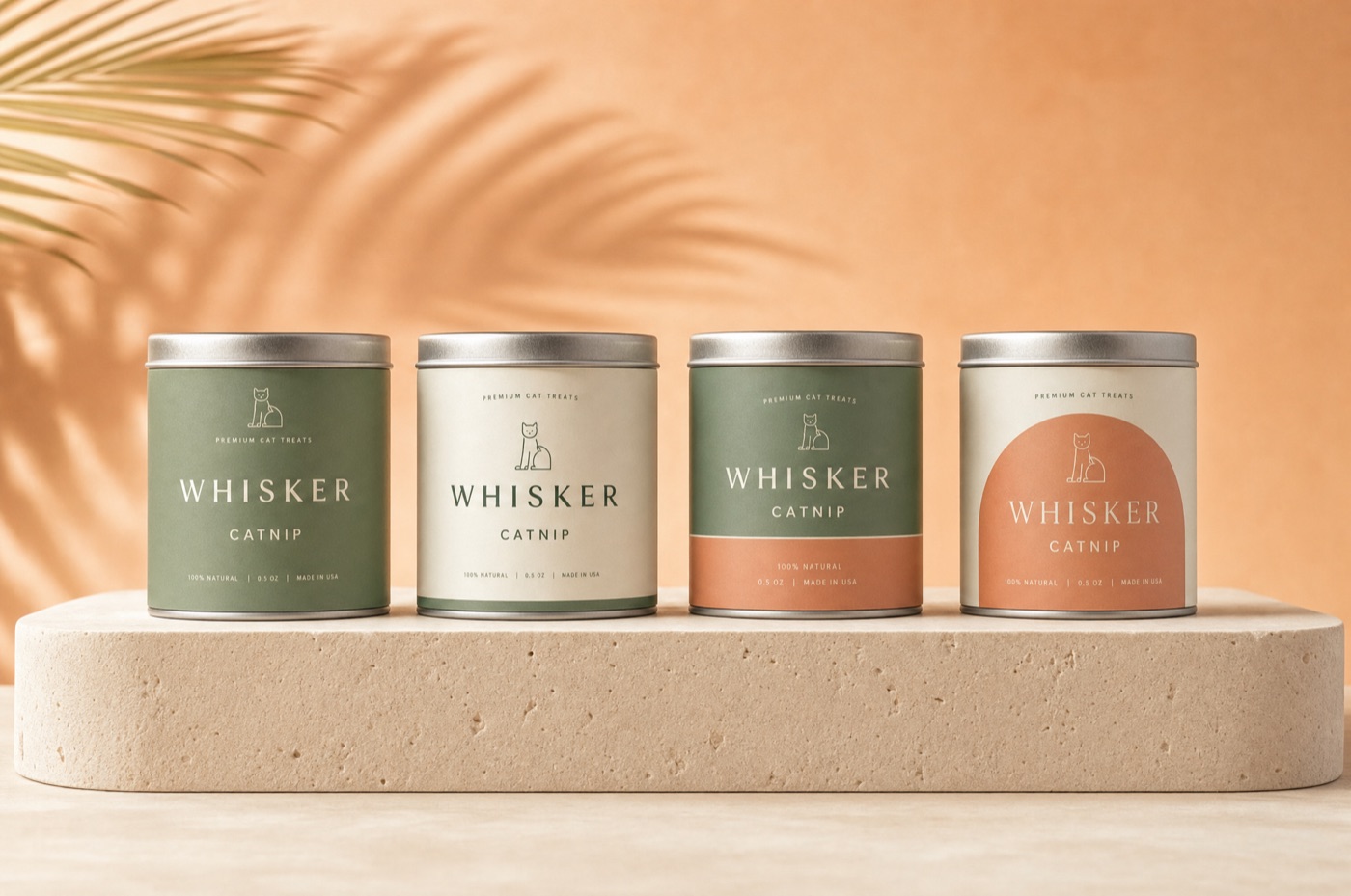
Direct answer
Print-on-demand can only change the surface of somebody else’s blank. Dough covers that case through its catalog, with no custom development needed, and keeps going when the product itself has to change: a new formula, format, function, or package routes through sourcing, quotes, samples, and production instead of stopping at the edge of a printable catalog.
At a glance
| Decision | Dough | Print-on-demand |
|---|---|---|
| What you can change | Product, formulation, format, packaging, brand, and storefront | Artwork on a predefined blank |
| Product range | Catalog goods plus custom R&D projects | The provider’s printable catalog |
| Launch speed | Fast on the catalog path, longer on the custom path | Fast once the artwork is ready |
| Upfront commitment | Varies with samples and production method | Usually produced per order |
| What it solves | Making the product itself, not only its surface | Printing a design onto a provider blank |
Artwork is the only variable you get
Print-on-demand gives you one place to be original: the surface. The object underneath is a blank from a provider catalog, identical to the one every other seller prints on, chosen by somebody optimizing for printability rather than for your customer.
For a poster or a tour shirt that is often enough, and Dough covers that case too: run a catalog-only pass and you get in-catalog products with no custom development, on the same fast path, with your brand and storefront built around them.
The difference is what happens next. On Dough the catalog is a starting point rather than a ceiling, so the moment your idea needs the object itself to change, you are not starting over somewhere else.
The ceiling you hit with a printable blank
The constraint becomes a problem the moment your idea needs the object to be different. A better grip, a specific fabric weight, a formula without a particular ingredient, a container that fits in a car door, a pack that holds three instead of one. None of that is expressible as artwork.
This is where creators typically stall. The audience is asking for a real product, the concept is sound, and the tooling they have can only decorate things somebody else designed. The next step, finding a manufacturer who will make a modest run of something new, is a completely different skill set.
What Dough adds beyond artwork
Dough is built for the step after the blank runs out of room.
- Product drafts generated from a description, not from a template of printable items
- A custom lane that carries a concept through sourcing, supplier quotes, samples, and production
- Sample ordering, so you hold the thing before you commit to a run
- A price built from the product’s real cost, with a floor that prevents pricing below viability
- Product photography and video generated from the product you actually made
- A storefront and buy links published with the product, plus pre-orders while it is still being made
Both paths start the same way in Dough
You do not have to decide up front. Describe the idea and ask for a catalog-only pass to see what can be made with no custom development, which is the fast, low-cost route and the closest equivalent to print-on-demand. Ask for the unrestricted pass and you also get concepts that require real development.
Seeing both next to each other is usually what settles the question. Often a catalog product carries the first launch while a custom version is developed behind it.
Find where the value lives in your product
Ask what the customer is actually paying for. If it is the artwork or the identity it signals, keep the product simple and put your effort into the design and the audience. Dough builds that as a catalog product without custom development.
If they are paying for a new function, a formulation, a physical format, or a packaging experience, then the product itself is the value, and a tool that can only decorate somebody else’s blank cannot deliver it. That is the case Dough is built for, and it is the same account either way.
Validate before adding complexity
A custom process is not automatically the better choice. Start with the least complex version that can test the core promise to the customer. Add tooling, custom components, or a new formula only when those changes are central to why somebody buys.
A useful sequence: sell the catalog version to prove there is demand, use what you learn to write the specification for the custom version, and finance that run with pre-orders rather than savings.