
Founder guide
How to start a coffee brand
Sourcing, roasting partners, packaging and degassing, freshness economics, and how to test demand for a coffee brand before committing to volume.
Direct answer
A coffee brand is a freshness business. Green coffee sourcing, roast profile, and packaging with a degassing valve decide product quality, and shelf life decides your inventory risk. Most first brands work with a contract roaster, and pre-orders let you roast to demand instead of guessing.
Contract roasting is the normal starting point
Buying a roaster, learning to roast consistently, and meeting food safety requirements is a business in itself. A contract roaster lets you specify origin, roast profile, grind, and packaging while they carry the equipment and the compliance overhead.
What you give up is control over the roast curve and a share of the margin. What you gain is the ability to launch a brand this quarter rather than next year, and to find out whether anyone wants your coffee before you own equipment.
Freshness is the whole product
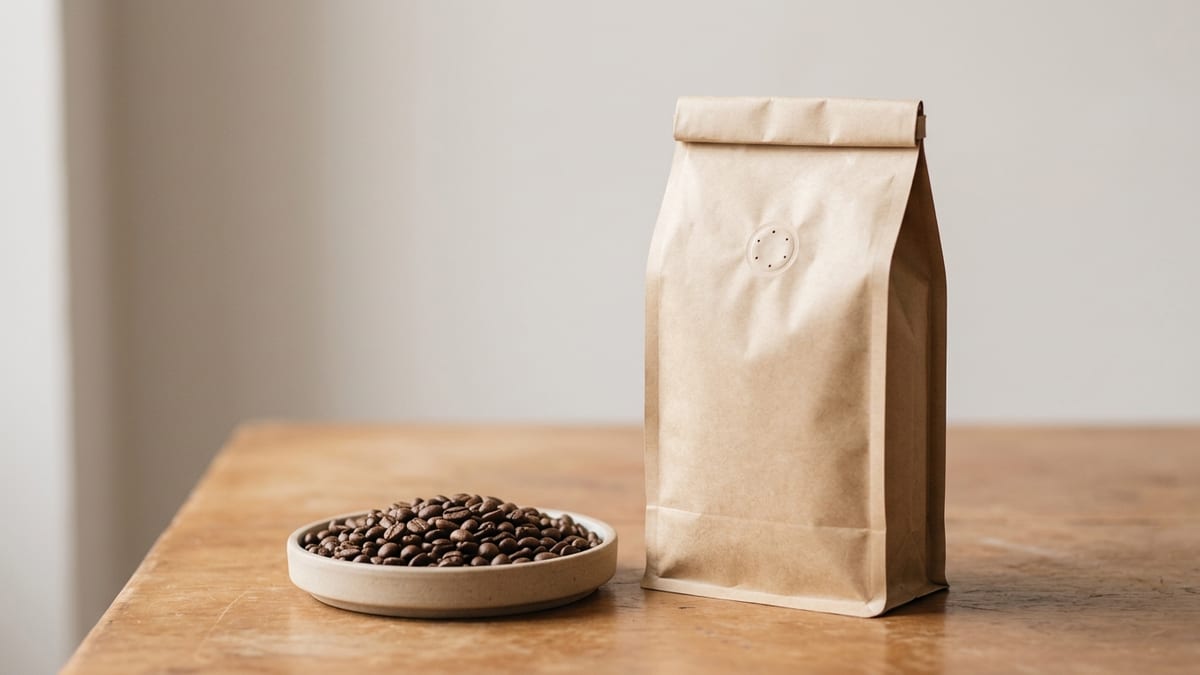
Roasted coffee degasses for days after roasting and degrades steadily after that. A one-way valve on the bag lets carbon dioxide escape without letting oxygen in, which is why coffee packaging looks the way it does.
Whole bean holds far longer than ground. Every convenience you add for the customer by pre-grinding is quality you subtract from the cup they eventually drink, and that trade is worth making deliberately rather than by default.
- Print or stamp the roast date, not only a best-before date
- Choose bag size against realistic household consumption
- Confirm whether your roaster fills and seals or expects you to
- Decide whole bean and ground as separate stock keeping units
Sourcing claims need to be true
Origin, farm, varietal, process, and certification claims are all verifiable, and the specialty coffee audience verifies them. Certifications such as organic or fair trade have specific certifying requirements, and using the language without the certification is a legal problem rather than a marketing shortcut.
Keep documentation from your importer or roaster for every claim on the bag. The traceability story is a real differentiator when it is real, and a liability when it is decorative.
The economics of a bag
Your cost stack is green coffee, roasting and packing, the bag, the label, freight, and shipping to the customer. Green coffee prices move, so a margin calculated once is a margin that expires.
Coffee also has a natural repeat cadence, which means acquisition cost can be amortized across reorders in a way most product categories cannot. Build the model around repeat purchase and the first-order margin stops being the whole story.
How to run this in Dough
Describe the coffee: the origin or blend character, the roast level, the person drinking it, and the ritual it belongs to. Dough generates concepts you can refine, then builds the product, the bag design, and a branded storefront.
Set the price against a visible cost breakdown, attach a launch goal with a target quantity and a deadline, and take pre-orders. Coffee is one of the few categories where pre-orders improve the product rather than only de-risking it, because roasting to a known order means the customer receives coffee roasted days ago instead of months ago.
What changes about the order
- Launching the brand
- UsuallyBag design, naming, and a store build come before the first roast, and each is a separate engagement.
- With DoughThe bag design and storefront are built from a description, so the brand can be tested before any coffee is roasted.
- Deciding volume
- UsuallyYou roast to a forecast, and freshness starts degrading the moment the forecast is wrong.
- With DoughPre-orders let you roast to a known order, which improves the coffee rather than only reducing the risk.
- Holding margin
- UsuallyGreen coffee prices move and the margin calculated at launch quietly expires.
- With DoughThe price is set against a visible cost breakdown you can revisit when the input cost moves.